Five Ways Your Club Can Pay the Rent Without Selling Another Raffle Ticket
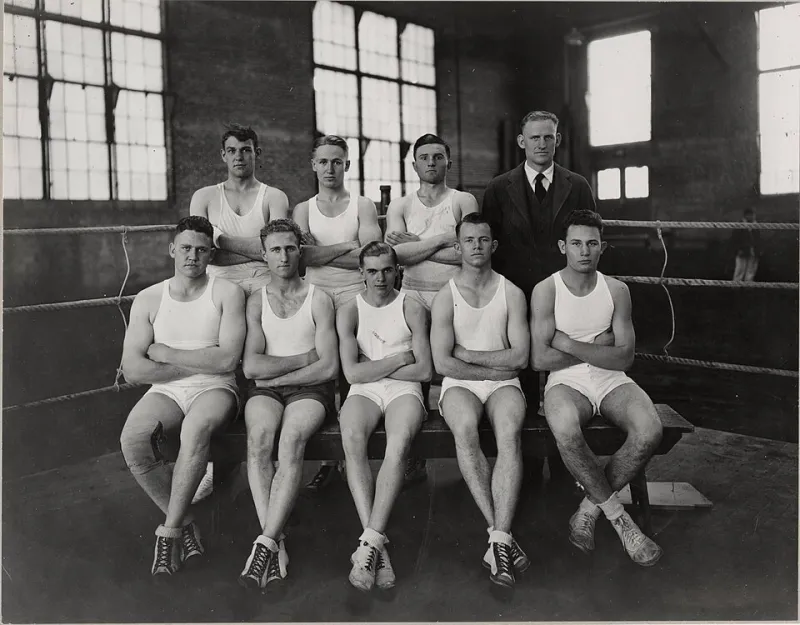
Photo: Unknown photographer, Public domain, via Wikimedia Commons
Every amateur club in the country knows the drill. Rent is due, the boiler needs a look, three kids need travel money for a tournament in another state, and somebody's aunt suggests a bake sale.
There's nothing wrong with a bake sale. But a club that depends on a bake sale is a club that's always about six weeks from a hard conversation. So let's talk about money that shows up on the calendar instead of in a crisis.
Below are five revenue streams we've watched work at small and mid-size US clubs. None of them require a marketing department. All of them require a decision about what kind of club you want to be.
1. The Beginner Short Course
What it is: A fixed-length introduction — six weeks, twice a week, capped at 12 to 16 people. Wraps, stance, basic footwork, jab, straight right, defensive posture, and a clear path into the regular program.
Why it works: Beginners are intimidated by the phrase "join a boxing gym." They are not intimidated by "six-week intro, Tuesdays and Thursdays, $149." The deadline does the selling for you, and the cap keeps the coaching real.
Pricing notes: $120 to $180 for a six-week block is normal in most US markets, with a discount for anyone who registers for the full year afterward. Charge up front — partial-payment chaos eats the margin.
Staffing: One lead coach and one assistant is enough for sixteen people, and the assistant can be a reliable amateur from your own competition team getting rep time. Pay them something. Free labor is not a business model.
The catch: You must actually pass people along. If graduates don't flow into the regular membership, you've built a revolving door, not a pipeline.
2. Small-Group Conditioning Blocks
What it is: Not boxing lessons. Conditioning — jump rope, bag intervals, footwork ladders, core work, mobility — sold as a four- or eight-week block at a set time slot.
Why it works: It fills dead hours. A 6 a.m. or 7:30 p.m. slot that sits empty becomes an asset, and the people who show up often convert to full members once they get curious about the actual sport.
Pricing notes: $15 to $25 per session, or $99 to $139 for an eight-week block. Sell blocks, not drop-ins. Drop-in culture sounds friendly and bleeds attendance.
Staffing: One coach, max ratio of about twelve to one. If you don't have a coach to spare, this is the stream to skip — a bad conditioning class damages the brand faster than no class at all.
Protect the identity: Be honest in the marketing. This is fitness with a boxing flavor, not a pathway to competing. Nobody should sign up thinking otherwise.
3. Corporate Team Sessions
What it is: A one-off or four-week series for a local business — bag work, partner drills, footwork, no contact, no sparring, plenty of water breaks. Usually 8 to 20 employees.
Why it works: Companies have wellness budgets and a genuine shortage of interesting things to do as a team. A boxing gym is memorable in a way that a conference room is not.
Pricing notes: $250 to $500 per session for a group under twenty, with a discount for a four-week series. Add a small upcharge for a Saturday slot — you're giving up prime member time.
Staffing: Two coaches for twenty people, and a hard rule: no contact, no headgear, no exceptions. The moment someone gets dinged at a corporate outing, you've got a problem nobody needs.
How to find them: Walk into the businesses within a mile of the gym. Banks, law offices, warehouses, physical therapy clinics, the fire station. One conversation usually beats a hundred emails.
4. Event Partnerships
What it is: Local businesses sponsoring your shows rather than donating to a fundraiser. A barber shop pays for the ring card girls' jackets, a restaurant pays for the announcer, a contractor covers the sanctioning fees.
Why it works: Sponsorship is a cleaner pitch than a donation. You're offering visibility in front of a couple hundred people, not asking for charity. And unlike a one-night fundraiser, a sponsor relationship tends to renew.
Pricing notes: Build three tiers — $250, $500, $1,000 — and list exactly what each includes. Logo on the poster, logo on the livestream overlay, a table at ringside, a mention from the announcer. Specifics close deals.
Staffing: One volunteer owns sponsorships, full stop. If three people split it, nobody does it.
One caution: Keep sponsor messaging off the fighters. A kid's trunks shouldn't become a moving billboard unless the family is fully on board, and probably not even then.
5. Branded Merchandise
What it is: Club hoodies, tees, beanies, hand wrap sets, gym bags — sold to members, families, alumni, and the crowd at your shows.
Why it works: It's the cheapest form of marketing you'll ever pay for. A kid wearing your hoodie to school is a billboard that walks around town, and family members buy two of everything.
Pricing notes: Target a 2.5x to 3x markup over your cost. A $14 blank hoodie selling at $40 to $45 works. Order small runs first — fifty units, not five hundred — and reorder what actually moves.
Staffing: One person manages the inventory spreadsheet, and it should be a person who likes spreadsheets. Nobody wants to discover in November that the club is sitting on 140 medium tees.
The upside nobody mentions: Merchandise is the one revenue stream that directly reinforces the club's identity rather than diluting it. Say the name right, put a good design on it, and it does community work while it does financial work.
The Line You Don't Cross
Every one of these streams can be run in a way that protects the amateur-first soul of a club, or in a way that quietly erodes it. The difference is usually three rules:
- Open gym hours stay open. If a paying class takes over every prime slot, you've become a fitness studio that happens to have a ring.
- The competition team never becomes a customer. Amateur boxers should not be charged extra for the privilege of representing the club. If anything, the commercial side subsidizes them.
- No pay-to-fight, ever. Sponsorship and classes are fine. Turning bouts into a fee schedule is where clubs lose the plot.
Start With One
Don't launch five programs in the same month. Pick the one that fits the calendar you already have, run it for a full cycle, and see whether it survives contact with reality. Then add the next.
A bake sale buys a bag of headgear. A beginner course, a conditioning block, a corporate client, a sponsor, and a hoodie table buy you a year.
Train hard. Fight smart. Belong — and pay the light bill.