Nobody Was Born a Coach: The Four-Rung Ladder That Turns Pad Holders Into Teachers
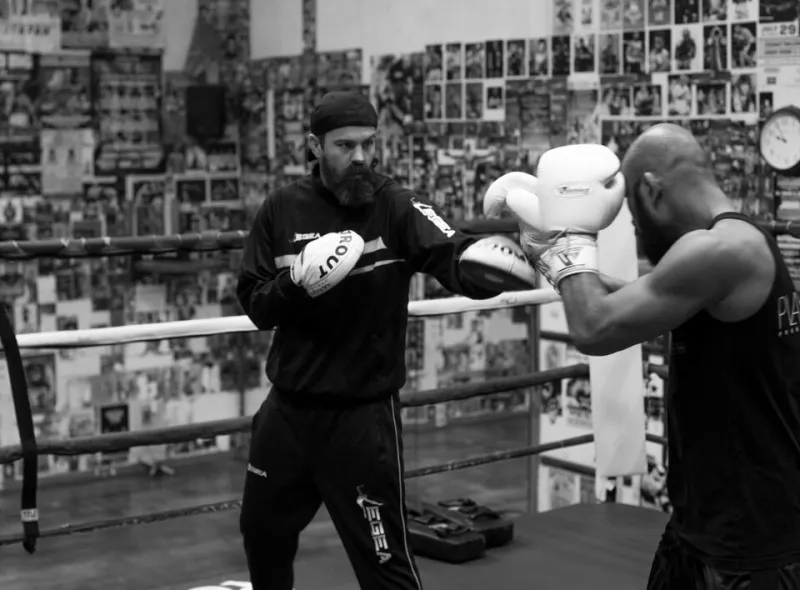
Photo: Iamragnorak, CC BY-SA 4.0, via Wikimedia Commons
Every club has that person. They roll in at 5:40, they know where the spare tape lives, and they will hold pads for anybody who asks, including the fourteen-year-old who throws everything at their face. They are also, quietly, the reason your beginners come back — or the reason they quietly stop, depending on whether anyone ever taught them what to say when a jab keeps dropping.
At Box Club Marjan we stopped pretending that holding pads is the same skill as coaching. It is not. Holding is a physical job with a rhythm you can learn in a month. Coaching is a decision-making job. It is knowing which of the six things wrong with a hook to fix first, and knowing when to say nothing at all because the kid just needs to hit something.
The good news: you do not need a formal coaching school to build coaches. You need a ladder with four rungs, and somebody willing to climb it with them.
Rung One: Watch First, Talk Second
New volunteers spend their first two sessions doing zero instruction. They shadow the lead coach with a clipboard and answer four questions at the end:
- Where does the lead coach stand during warm-ups, and why there?
- Which boxer got corrected first today, and what was the correction?
- What did the coach do when someone was struggling and getting frustrated?
- What was said at the end of the round — a fix, a praise, or nothing?
That last one is the whole curriculum in miniature. Beginners get corrected too much. Experienced boxers get corrected too little. Coaches who can hear the difference are ready for rung two.
Rung Two: Pads With a Purpose
Most pad holders are human heavy bags. They let the boxer dictate the round, then wonder why nobody is improving.
On rung two, the volunteer holds for exactly one drill per round and gets one job: call the correction out loud, once, in under eight words. "Lead hand back to your chin." "Turn the hip, not the shoulder." "Reset your feet." That is it. No speeches, no philosophy, no five-minute breakdown in the middle of a round.
The check for this rung is simple. If the boxer throws the same flawed punch five times in a row, the pad holder is not coaching. They are catching.
Rung Three: Run a Station
Now they own a fifteen-minute block of the group class. Typically the footwork corner, the double-end bag, or the mirror work while the lead coach handles the ring.
What we look for here is not brilliance. We look for three things:
- A stated goal. "By the end of this station you will exit the pocket on an angle, not straight back." Boxers should know what they are chasing.
- A demo that takes less than twenty seconds. Long demos lose the room.
- One correction per boxer, maximum. New coaches over-correct because it feels like work. It is usually noise.
Rung three is where most volunteers discover they like teaching. It is also where some discover they would rather just hold pads and go home, which is fine and worth knowing early.
Rung Four: Own a Boxer's Month
Lead-coach candidates take responsibility for one boxer for four weeks — the warm-up plan, the skill focus, the conditioning bias, the notes passed to whoever holds pads next.
Nobody gets thrown in alone. They draft the month on paper, the head coach marks it up like a term paper, and they adjust. Six weeks of that, and you have someone who can run a Tuesday without supervision.
Where the Certification Fits
A mentorship ladder is not a substitute for credentials. In the US, amateur coaching runs through USA Boxing registration, a background screen, and SafeSport training, with the coaching certification path and continuing education handled at the national level and through your Local Boxing Committee. Most clubs also want CPR and first aid on file, and any state athletic commission you deal with will have its own requirements for officials and event staff.
The practical move is to slot certification into rung three — not before. Volunteers who get sent to a course in week one often come back with a certificate and no club context. Volunteers who have already stood at a station for a month show up to that course with real questions, and they get far more out of it. Check current requirements directly with your LBC rather than trusting a forum post from three years ago, including this one.
The Friday Ten
The ladder collapses without a feedback loop, and the loop has to be short or volunteers quit. Ours is ten minutes at the end of the week, three questions, no performance-review language:
- What did you see this week that you would have done differently?
- What is one boxer you feel unsure about?
- What do you need from me next week?
That third question is doing most of the work. Half the time the answer is "nothing." The other half, it is "I don't know what to do with a southpaw," and now you have next week's staff development sorted for free.
What the Ladder Actually Buys You
Three things, and none of them show up on a balance sheet.
Beginners get protected. A volunteer on rung two who understands that the fix is a reset, not a toughness lecture, will not let a nervous first-timer get hurt in their first month.
Experienced members stay. Every serious amateur eventually asks a version of the same question: is there anything here for me besides showing up? Watching a coach develop is one answer. Being asked to become one is a better one.
And your club gets an identity that survives turnover. A gym built around one charismatic coach empties out the day that coach moves. A gym built around four people who all say roughly the same thing about footwork can lose any one of them for a season and keep running.
Start with one volunteer. Give them a clipboard on Thursday and see what they notice.