After the Bell: The 14-Day Recovery Card Every Amateur Boxer Should Carry Home

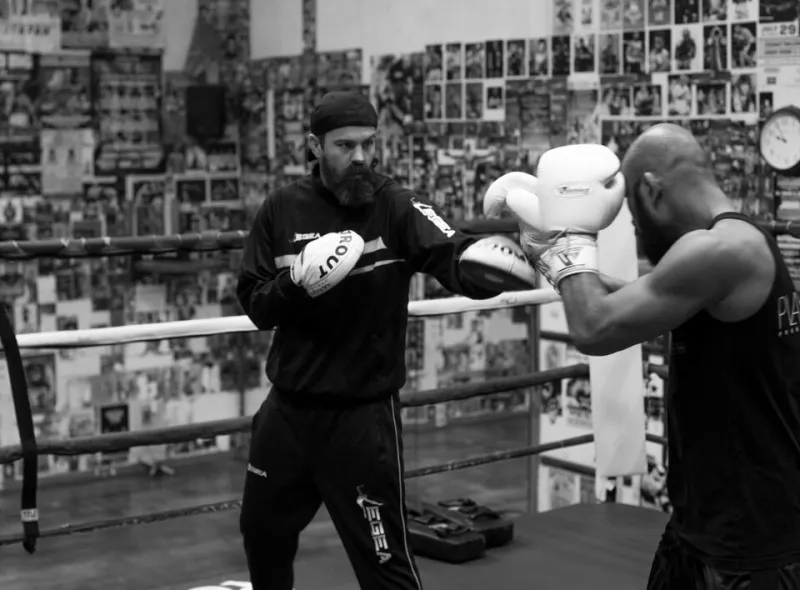
Photo: amateur boxer wrapping hands with coach in gym after training, via w.wallhaven.cc
Most amateur boxers are great at getting ready for a bout and terrible at coming down from one. The fight ends, the photos go up, and by Monday the fighter is back in the gym doing hard sparring because rest feels like something only other people need. Then the hands ache, the sleep is off, the weight jumps around, and nobody connects the dots.
At Box Club Marjan, we treat the two weeks after a bout as part of the training plan, not a vacation from it. Recovery is a skill. Like footwork or head movement, it gets better with repetition and worse with neglect. This is the simple card we want every amateur boxer to take home after their last bout of the season — or after any hard fight, honestly.
The First 48 Hours: Do Less Than You Want To
The first two days are not the time to prove toughness. They are the time to let the body file its paperwork. Expect soreness in the hands, forearms, shoulders, neck, and ribs. Expect your sleep to be weird. Expect to feel flat.
Hand and wrist care comes first. Keep the wraps off long enough to let the skin breathe, but use ice for short stretches if there is swelling — roughly 10 to 15 minutes at a time, with a cloth between the ice and the skin. Check knuckles and wrists for swelling that keeps growing, not shrinking. If you cannot make a fist comfortably two days later, that is information, not weakness.
Sleep is the other big one. A lot of fighters walk into the gym sleep-deprived for weeks before a bout and then try to “catch up” in one night. You cannot. Aim for extra sleep for several nights in a row. No late-night scrolling in bed, no heroic 5 a.m. roadwork yet. Let the nervous system come down.
Days 3 to 7: Move, Don’t Punish
This is where most people mess it up. They feel a little better, so they jump straight into pad work, heavy bag rounds, and sparring. Then they wonder why their hands still hurt a week later.
Keep this window boring on purpose. Walk. Ride a bike easy. Do gentle mobility for the shoulders, hips, and ankles. Stretch lightly after you are warm, not cold. If your club has an exercise bike or a treadmill, use it for easy conversation-pace work. The goal is blood flow, not a personal record.
Watch the weight rebound. After a bout, it is normal for the scale to move quickly for a few days as food, salt, and water come back. Do not panic and do not start a mini cut. Eat regular meals with protein, vegetables, and enough carbs to fuel easy movement. If you weighed in at 152 pounds and you are 160 by midweek, that is not a crisis. That is biology. Freaking out and skipping meals just adds another stressor.
This is also the week to check gear. Look at your gloves. Check the padding over the knuckles. Look at your wraps for fraying. Replace the cheap stuff before it becomes a hand problem. A $20 wrap is cheaper than a hand specialist visit.
Days 8 to 14: Graded Return, Not a Grand Reopening
By the second week, most boxers can start doing more — but “more” should still be controlled. Think of it as a ladder, not a light switch.
Start with roadwork. Easy jogging or brisk walking is fine if you feel normal. Add a little duration before you add intensity. If your head feels foggy, your hands throb, or your ribs hurt when you breathe deep, stay on the easy rung.
Bag work can come back next, but keep it light and technical. Short rounds. No all-out power shots. Focus on straight punches, footwork, and breathing. If your hands are still tender, hit the bag with wraps and lighter gloves — or skip bag work and do shadowboxing. Nobody hands out trophies for rushing back.
Pad work can follow if the bag work felt clean. Again, technique first. Coach holds, you move. No wild exchanges, no “just one hard round.” Sparring waits until the end of the two weeks at the earliest, and only if you feel normal, your hands are fine, and your coach agrees. For a fighter who took a lot of shots or got stopped, the timeline may be longer. That is not being soft. That is being a grown-up.
Red Flags: When the Gym Can Wait
Most post-bout soreness settles down. Some things do not. Get checked by a doctor instead of asking the group chat.
- Headache that gets worse, dizziness, vomiting, confusion, or trouble concentrating.
- Vision changes, ringing in the ears that will not quit, or feeling “off” in a way you cannot explain.
- Hand or wrist swelling that keeps increasing, numbness, weakness, or a knuckle that looks wrong.
- Rib pain that makes it hard to breathe, or pain that is sharp rather than a dull ache.
- Any time you feel unsafe to drive, work, or train.
This is not medical advice, and it is not a full checklist. It is a reminder that the gym is not the place to diagnose a problem. Coaches can hold pads. Doctors diagnose.
Make It a Club Habit
Print this as a one-page card. Hand it to every fighter after their last bout. Put a copy in the gear room and one in the office. Have coaches ask two simple questions at the next training session: “How are your hands?” and “How are you sleeping?” That alone will catch problems earlier than a hero speech about toughness.
The fighters who last are not the ones who train hardest every single day. They are the ones who know when to push and when to pump the brakes. Recovery is part of the craft. Treat it that way, and you will get more bouts, more seasons, and fewer mornings where your hands do not want to make a fist.